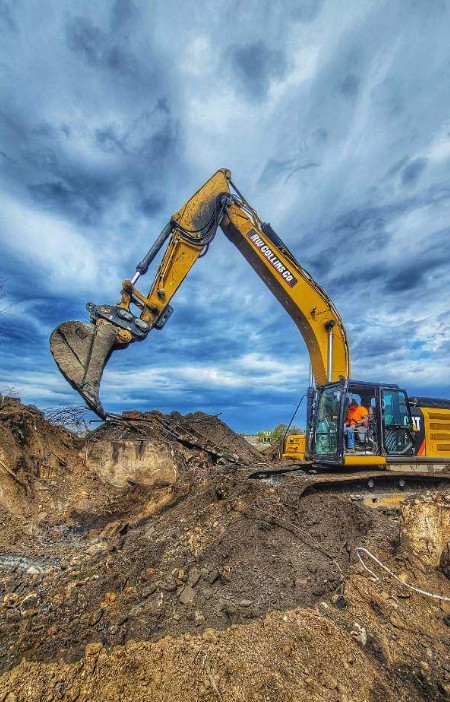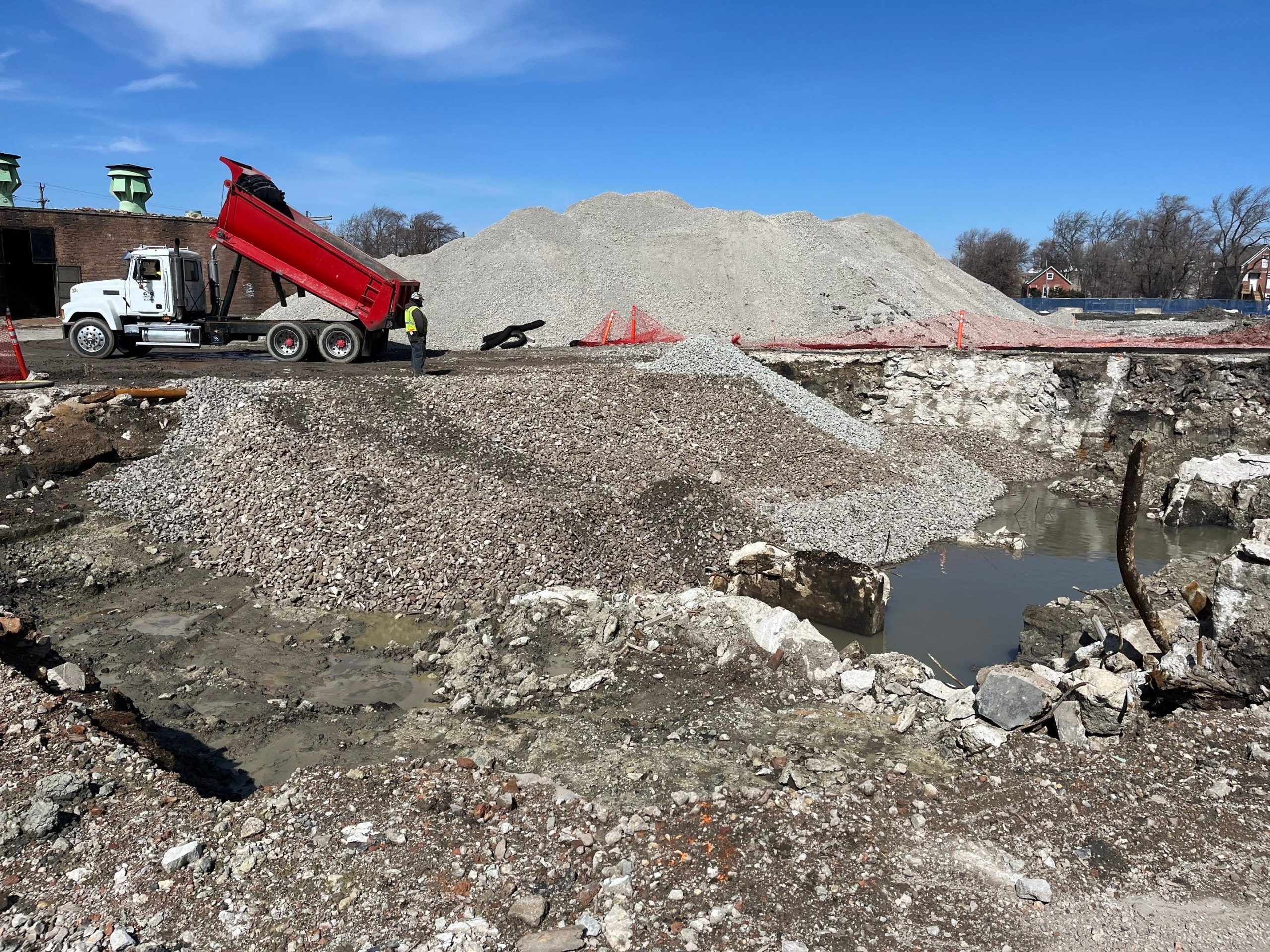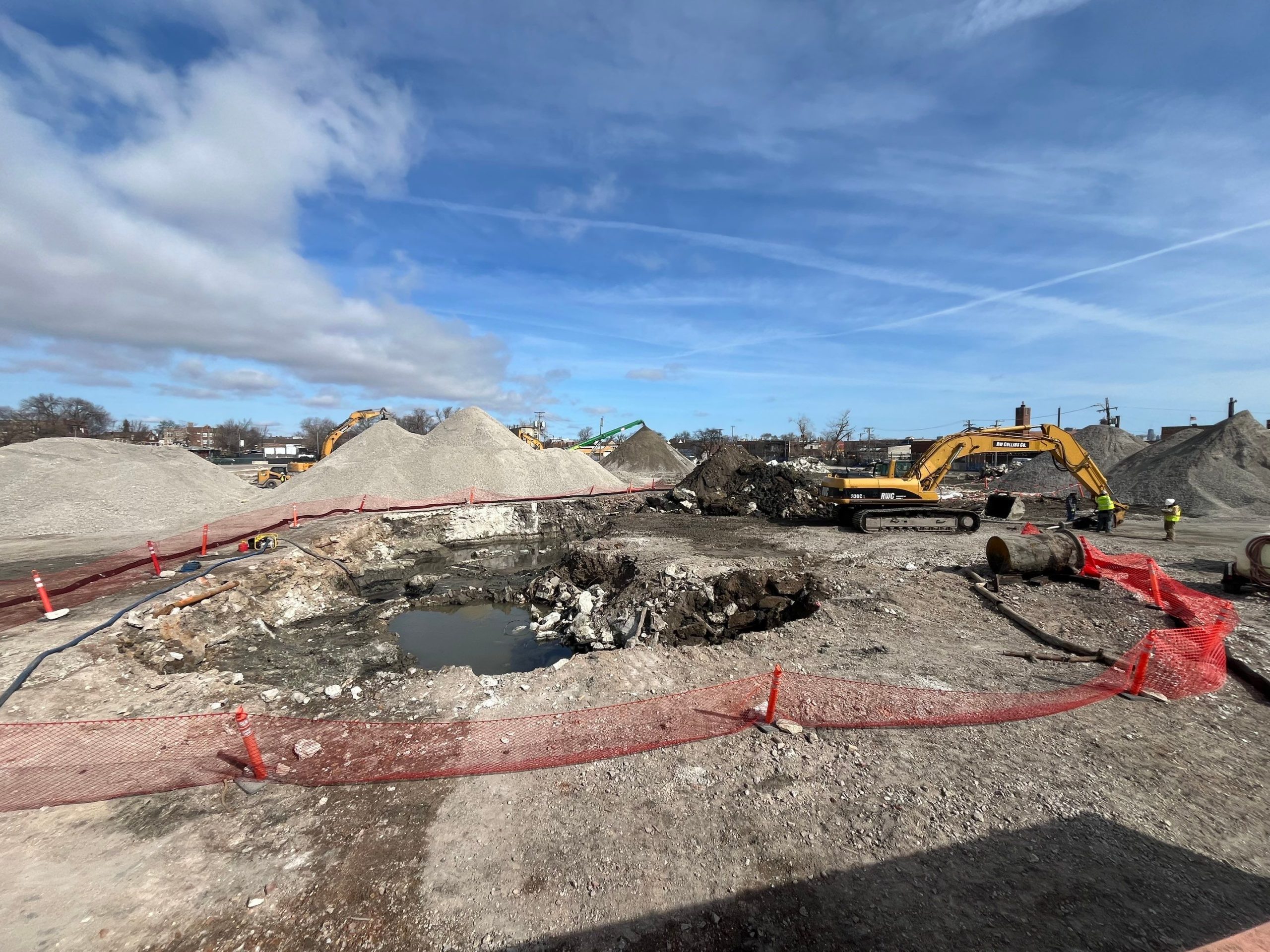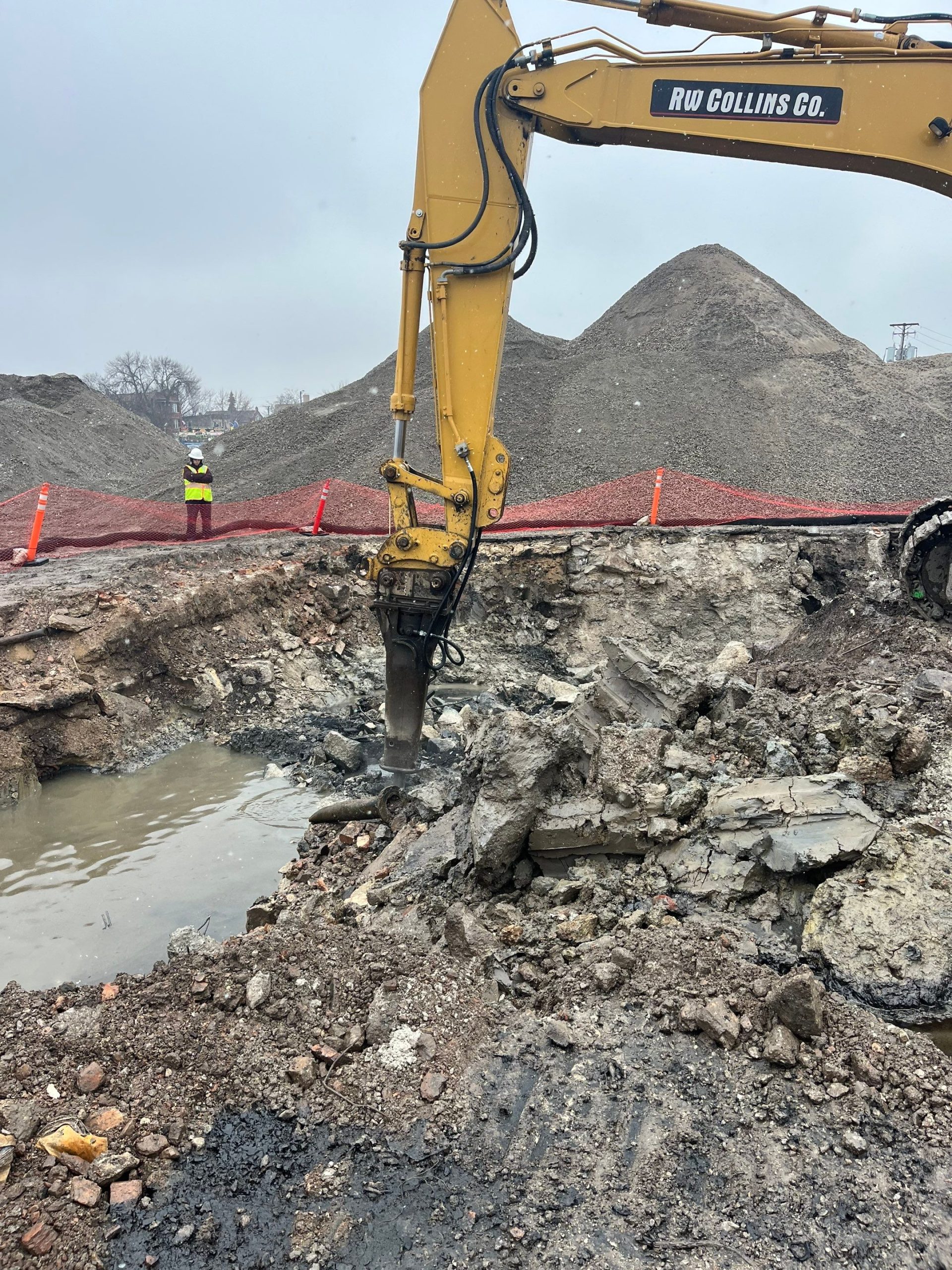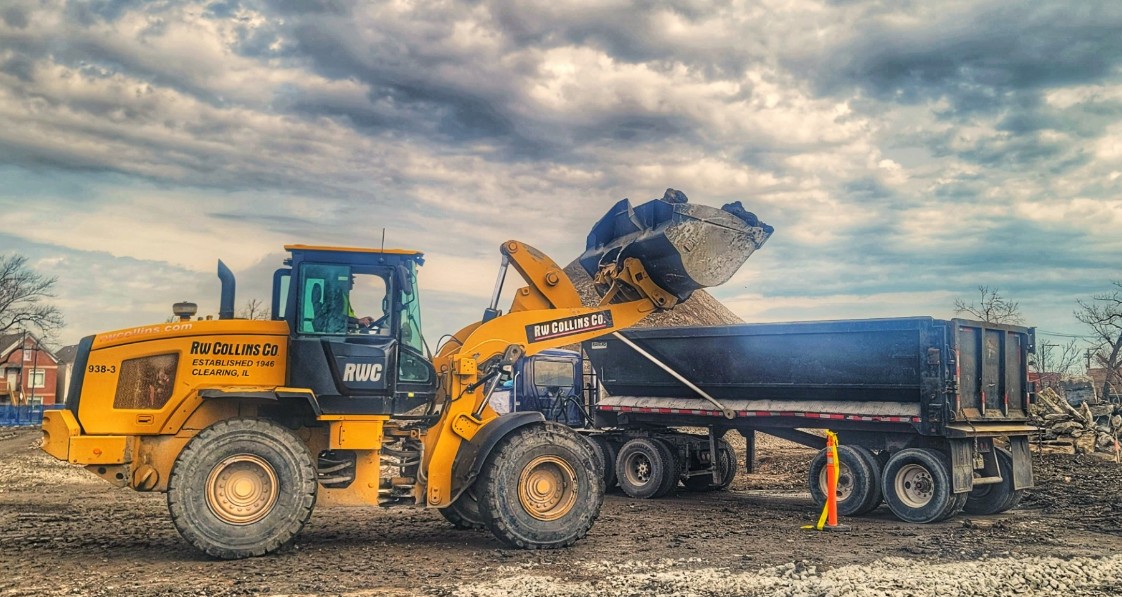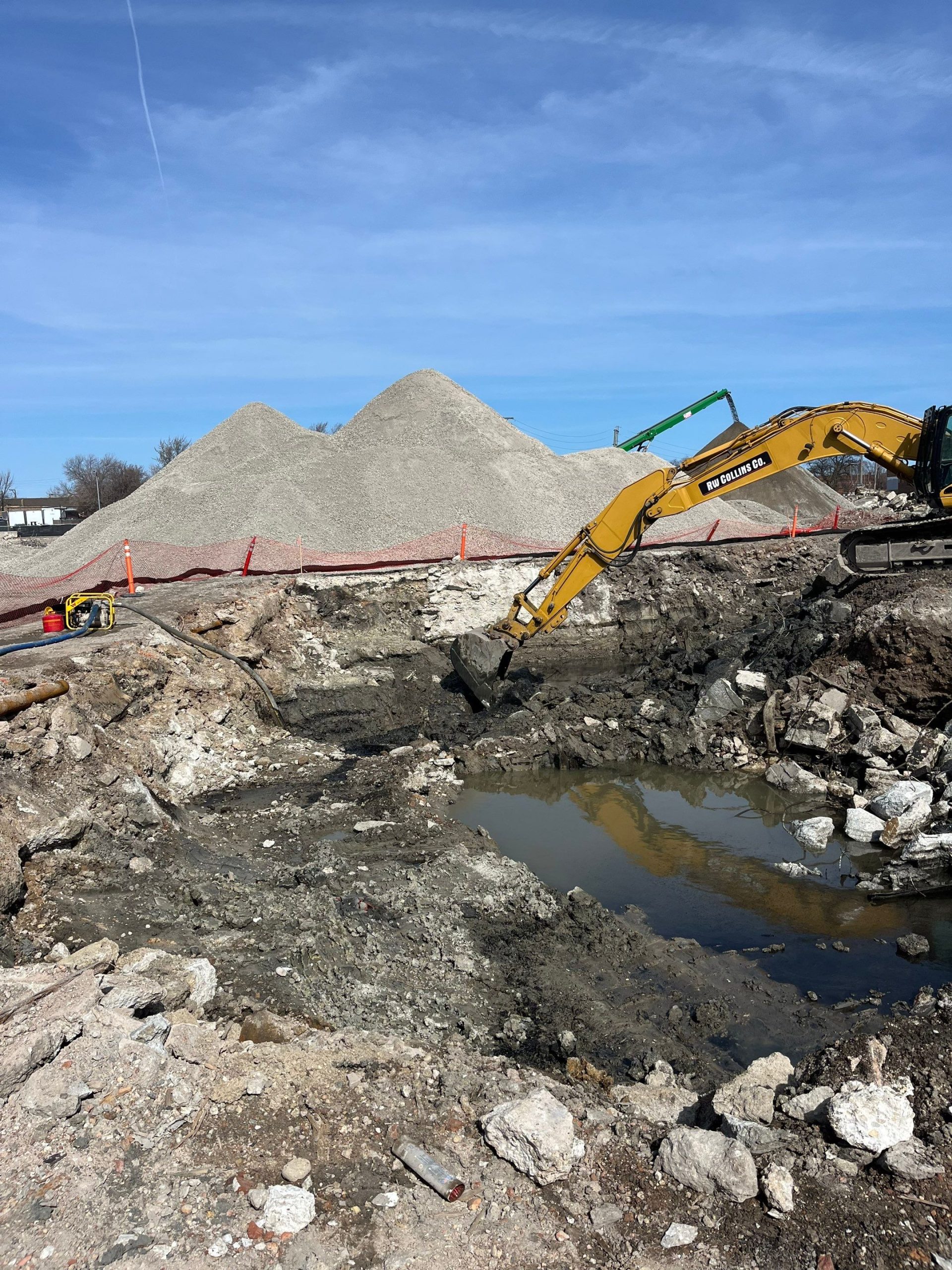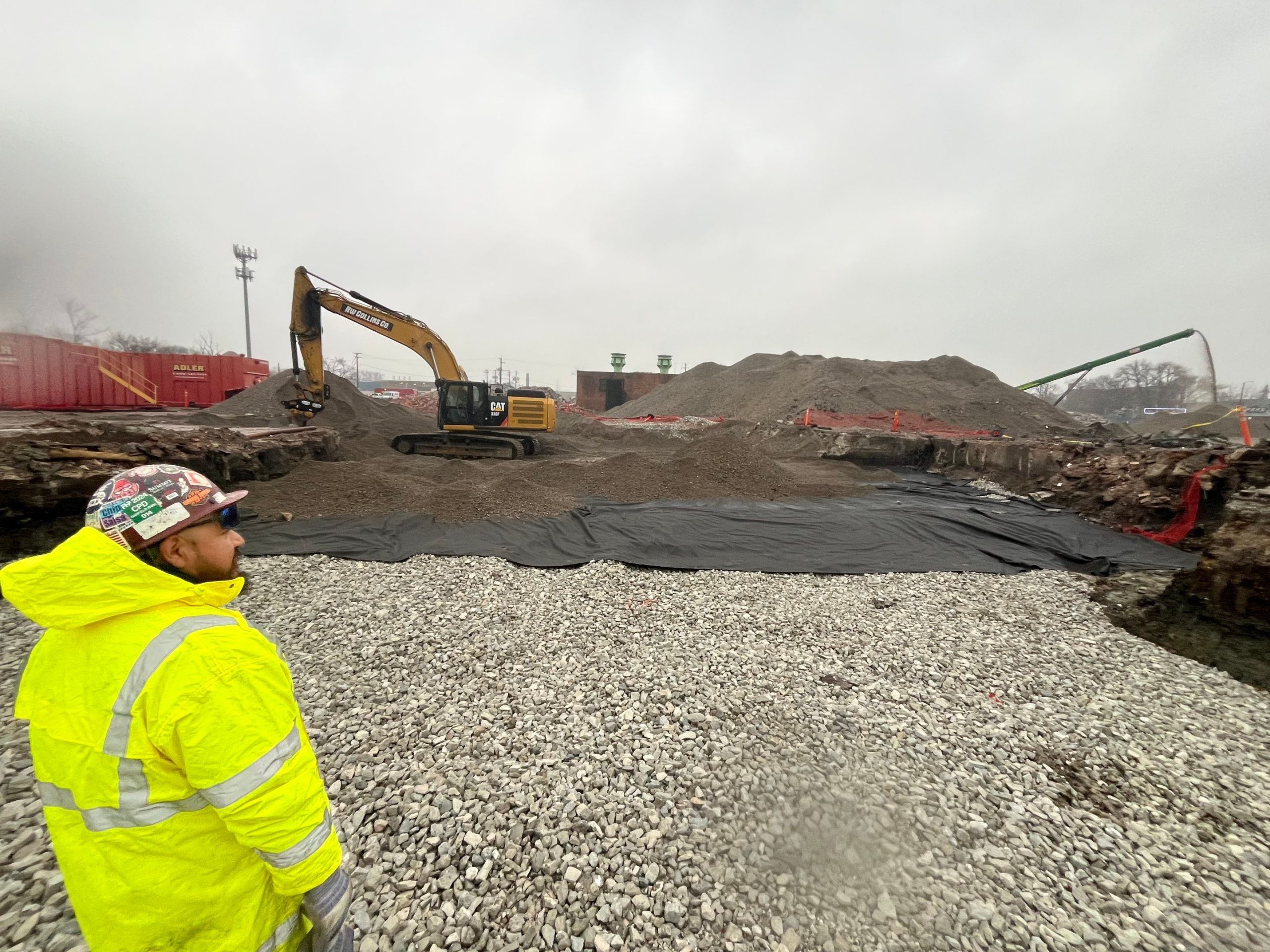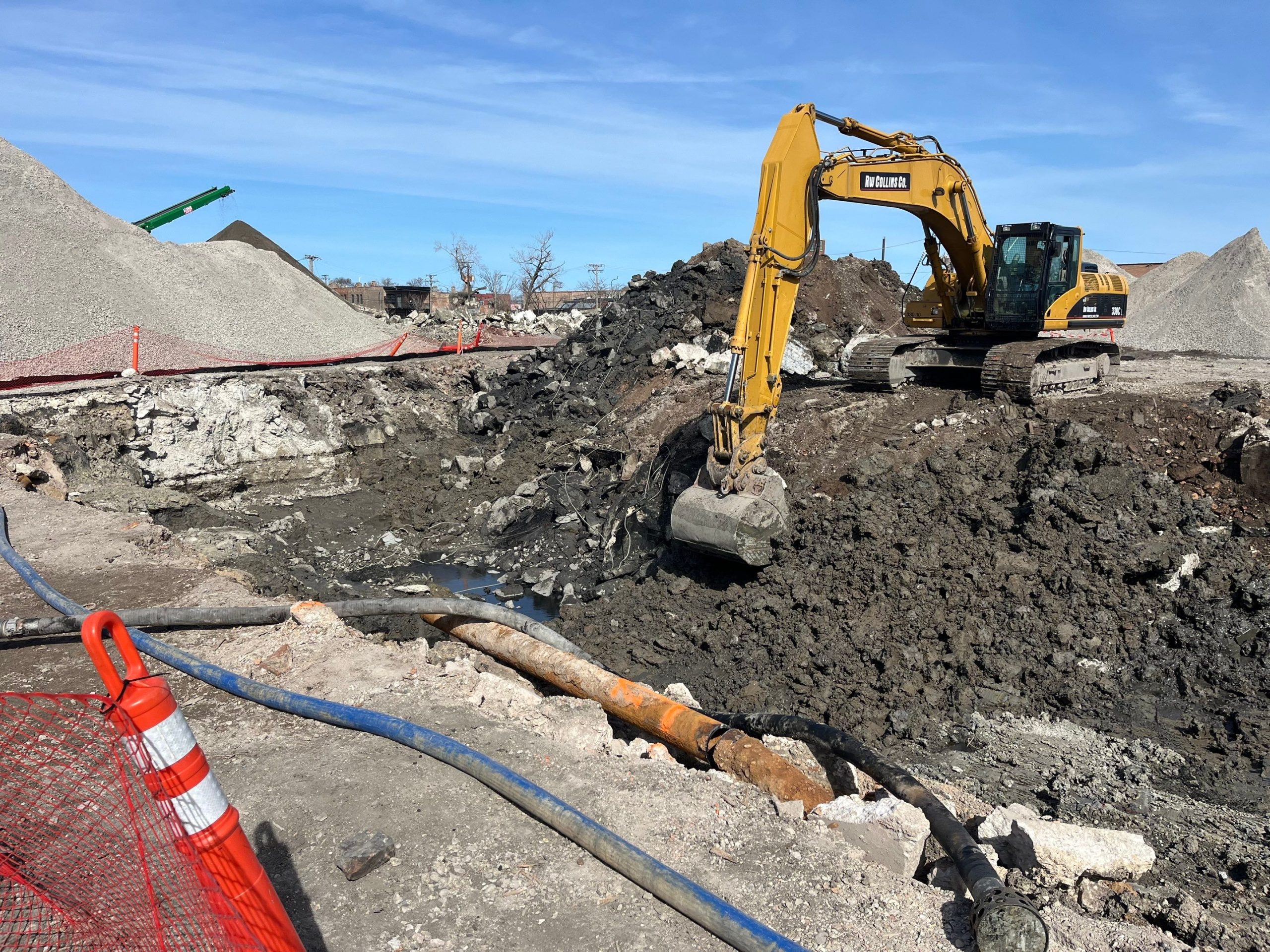
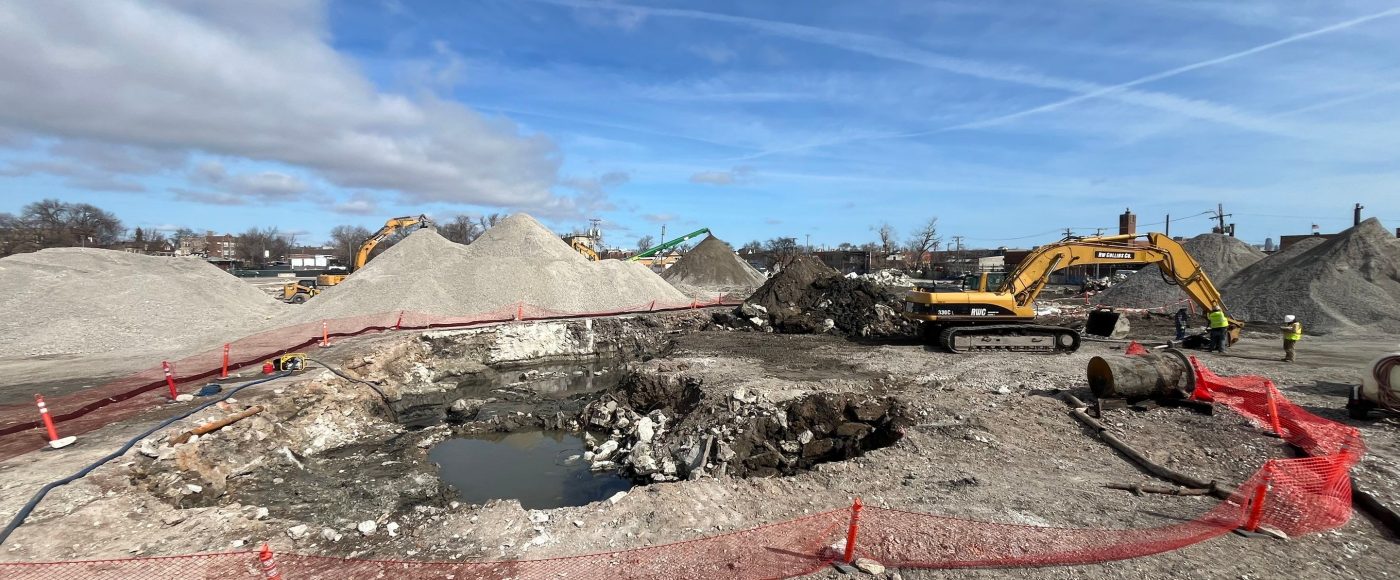
RWC’s scope of work involved the removal of non-hazardous and hazardous contaminated soil across targeted zones. Much of the excavation involved navigating through layers of concrete and old building materials, including slabs and footings. These materials were broken down and hauled off-site. Excavation continued until clean, undisturbed native clay was reached, and soils passed all required environmental testing. Multiple contaminated hot spots on the site were identified and remediated.
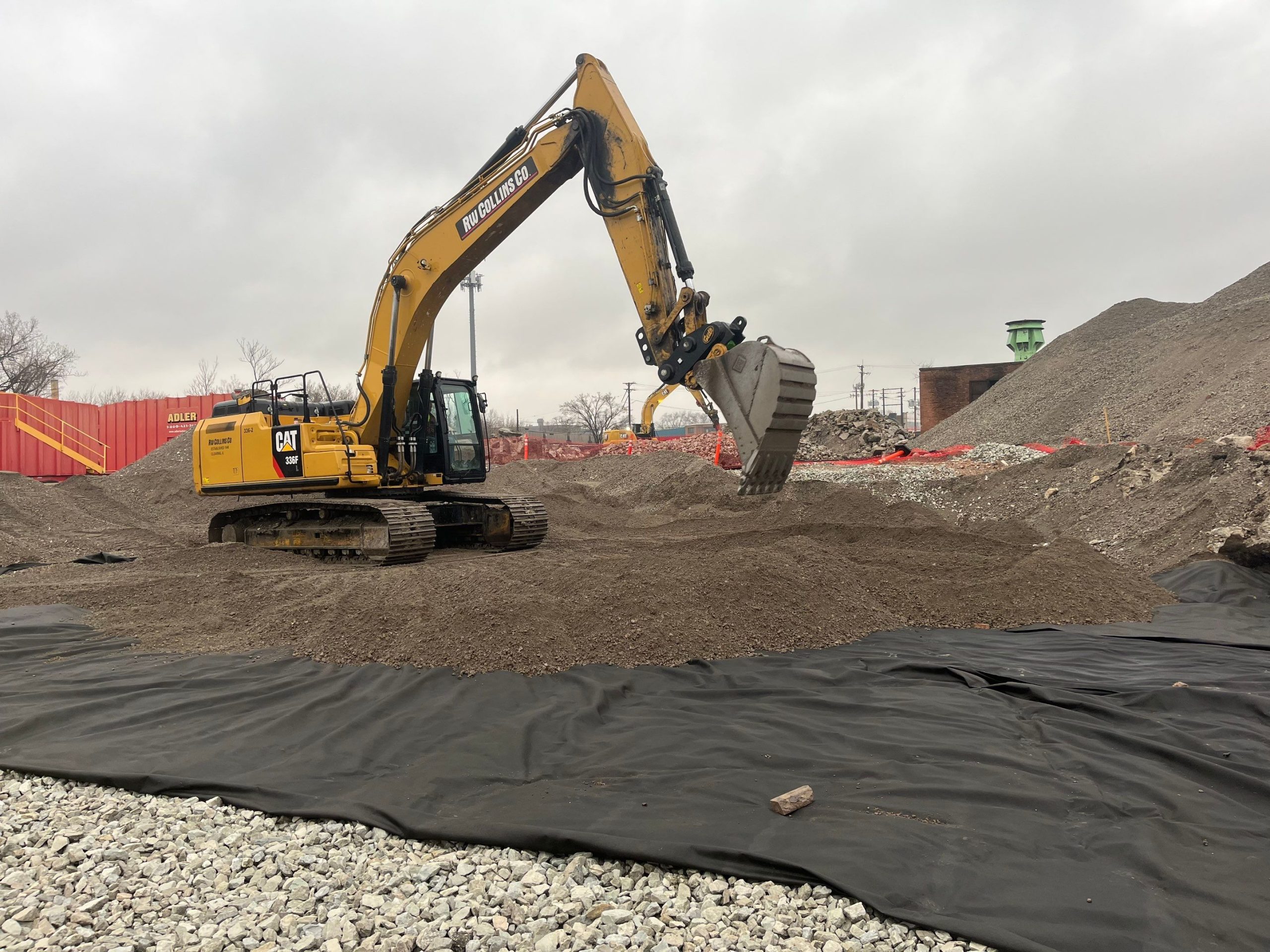
Following remediation activities, the site was backfilled and compacted with stone to establish a stable, secure foundation suitable for future construction. Compaction testing confirmed the site met the required standards for safe development.
In addition to remediation, RWC conducted a thorough UST investigation, which included four test pits and over 1,500 linear feet of trenching. No underground storage tanks were found on-site.
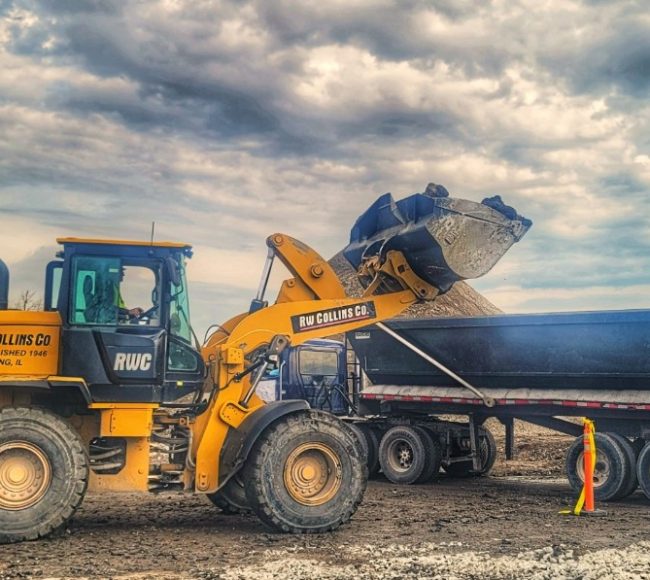
The project was completed throughout different phases, with more than 6,200 tons of material excavated and responsibly disposed of off-site.
Project Highlights
- Duration: 5 weeks
- Soil Removed: 6,200+ tons of contaminated material
- UST Investigation: 4 test pits and 1,500+ LF of trenching
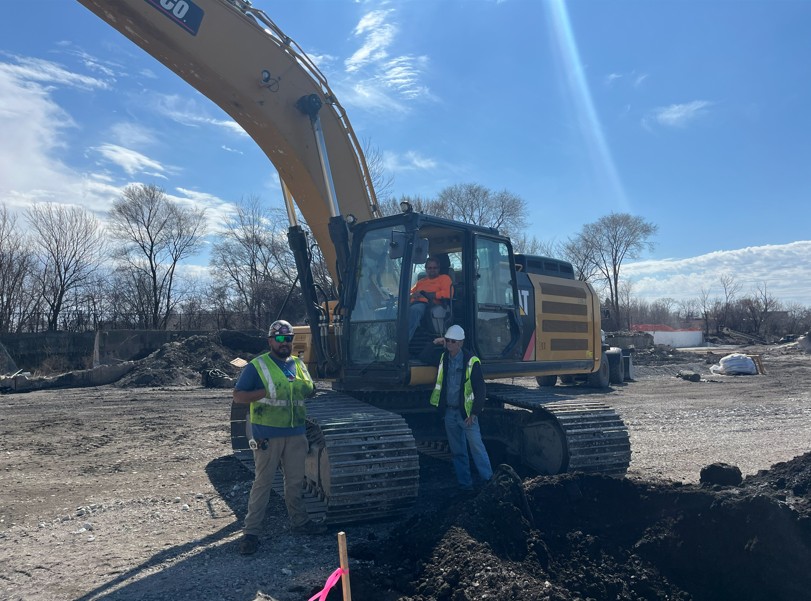
- Crew: 2 operators, 1 laborer, 1 superintendent
- Equipment Used: CAT 336, CAT 330, CAT 938, CAT CS433, CAT 289D3